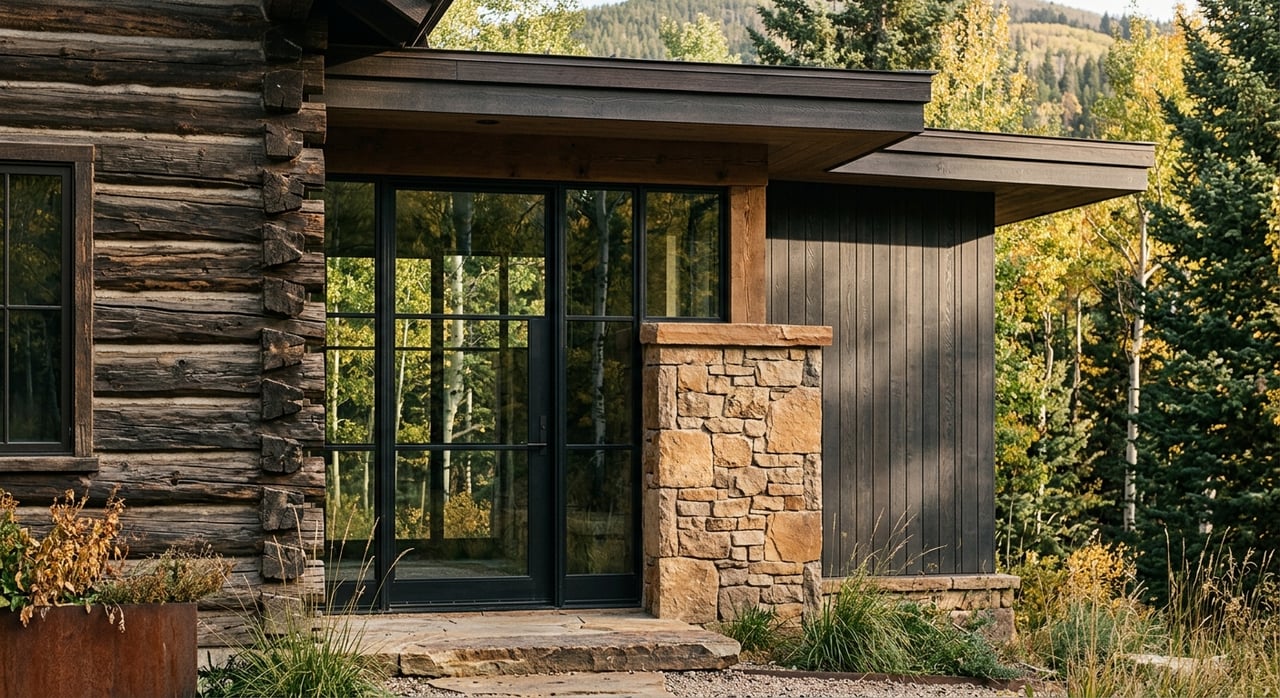
Wondering whether an Aspen home should feel sleek and glassy or rooted in old-town character? That choice is about more than looks. In Aspen, home style can shape your renovation options, maintenance priorities, and even how a property fits within the city’s preservation framework. If you are comparing historic and modern homes, this guide will help you understand the real differences so you can make a more confident move. Let’s dive in.
Why style matters in Aspen
In Aspen, architecture is closely tied to local policy. The city began formal preservation work in the early 1970s, and today the Historic Preservation Commission reviews development, demolition, relocation, and variances for designated historic properties and historic districts. Aspen also has more than 300 historic resources, which means style is not just a design preference here. It can affect what you can change and how you plan for the future.
Aspen also recognizes important post-war buildings through AspenModern. That program reflects the city’s effort to value both older historic homes and notable modern ones. For you as a buyer or seller, that means understanding style is really about understanding context, rules, and long-term use.
Historic Aspen homes at a glance
Historic homes in Aspen are often compact, simple in form, and oriented toward the street. The city’s design guidelines describe many historic buildings as rectangular in shape, with primary entrances facing the street and repeating front-yard setbacks that create a consistent streetscape. That pattern gives many older areas of Aspen a strong sense of rhythm and pedestrian scale.
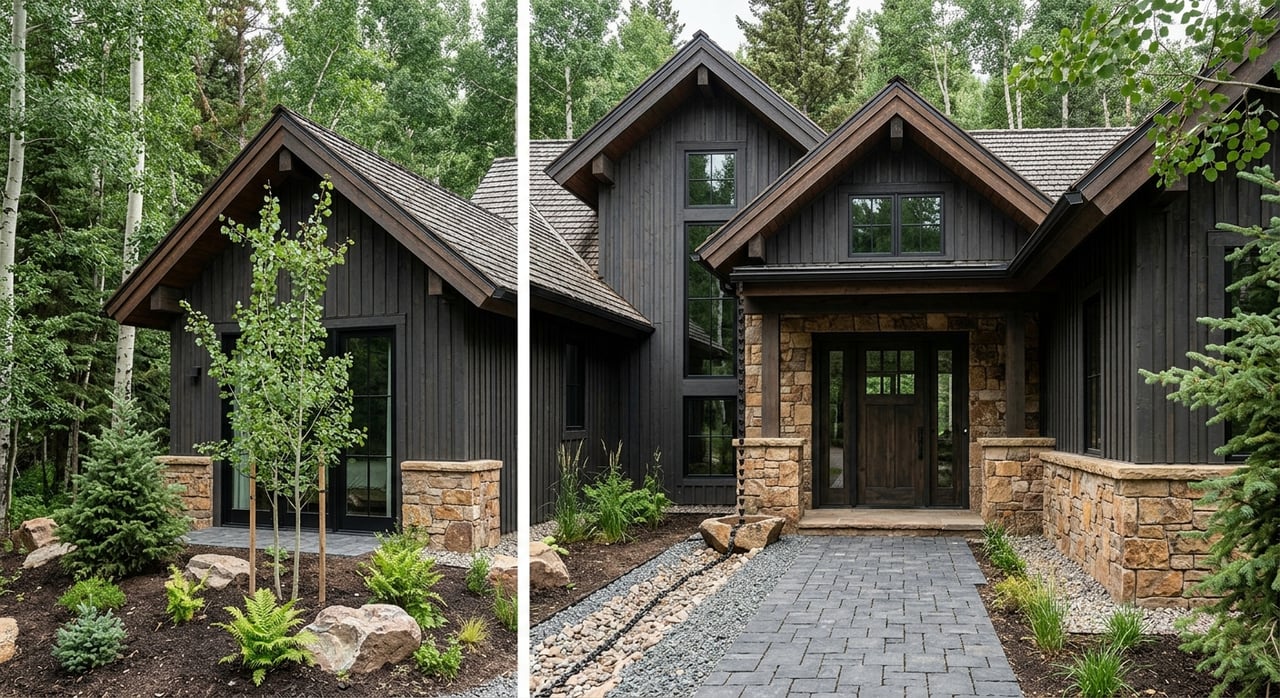
You will also see a range of roof forms in historic homes. Aspen Victorian houses may have gabled, hipped, shed, or flat roofs. Other traditional mountain styles, including Mountain Chalet and Pan Abode or log-kit houses, often feature deep eaves, balconies, wood trim, and natural stained wood finishes.
Common historic details
Historic character in Aspen often shows up in the smaller elements. Windows and doors carry much of the visual identity, and the city places clear importance on preserving those features. Many early Aspen homes use half-lite doors, though transom, full-lite, paneled, and slab doors also appear in older properties.
Window patterns matter too. Aspen’s guidelines emphasize preserving the ratio of window openings to solid wall area and discourage adding new openings on historic structures. In practical terms, that means the charm of a historic home often comes from restraint rather than embellishment.
Modern Aspen homes at a glance
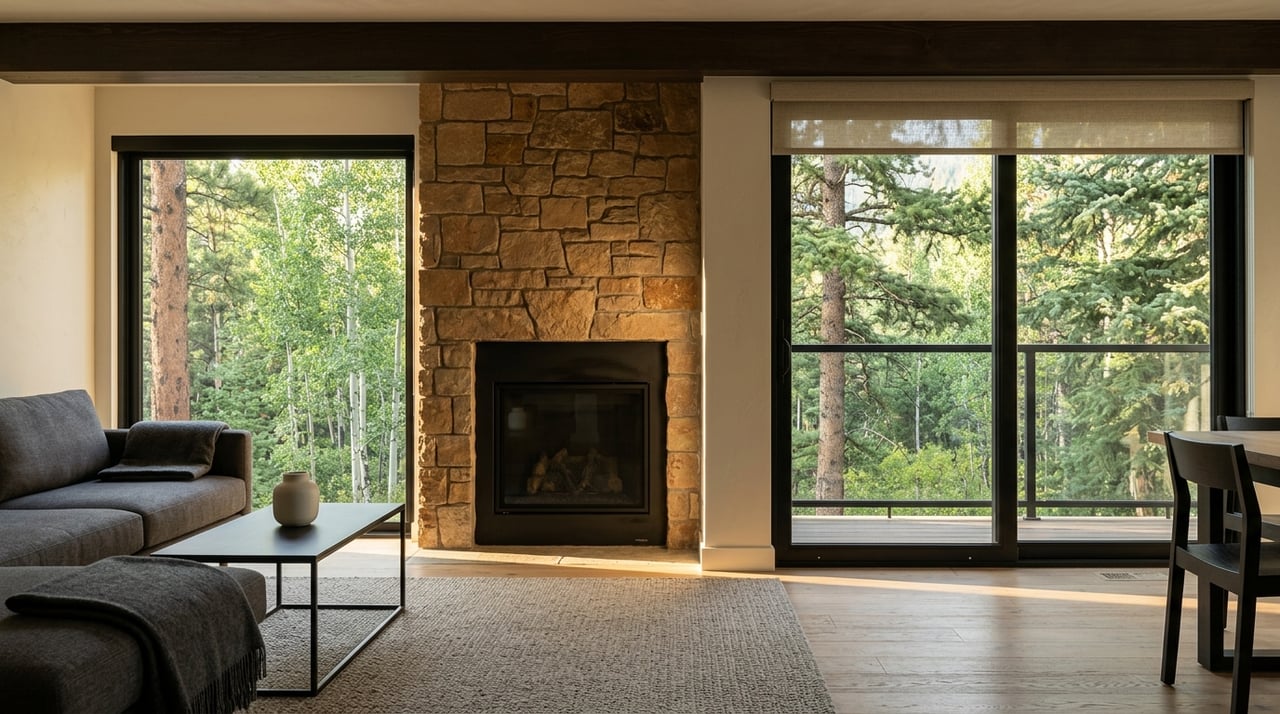
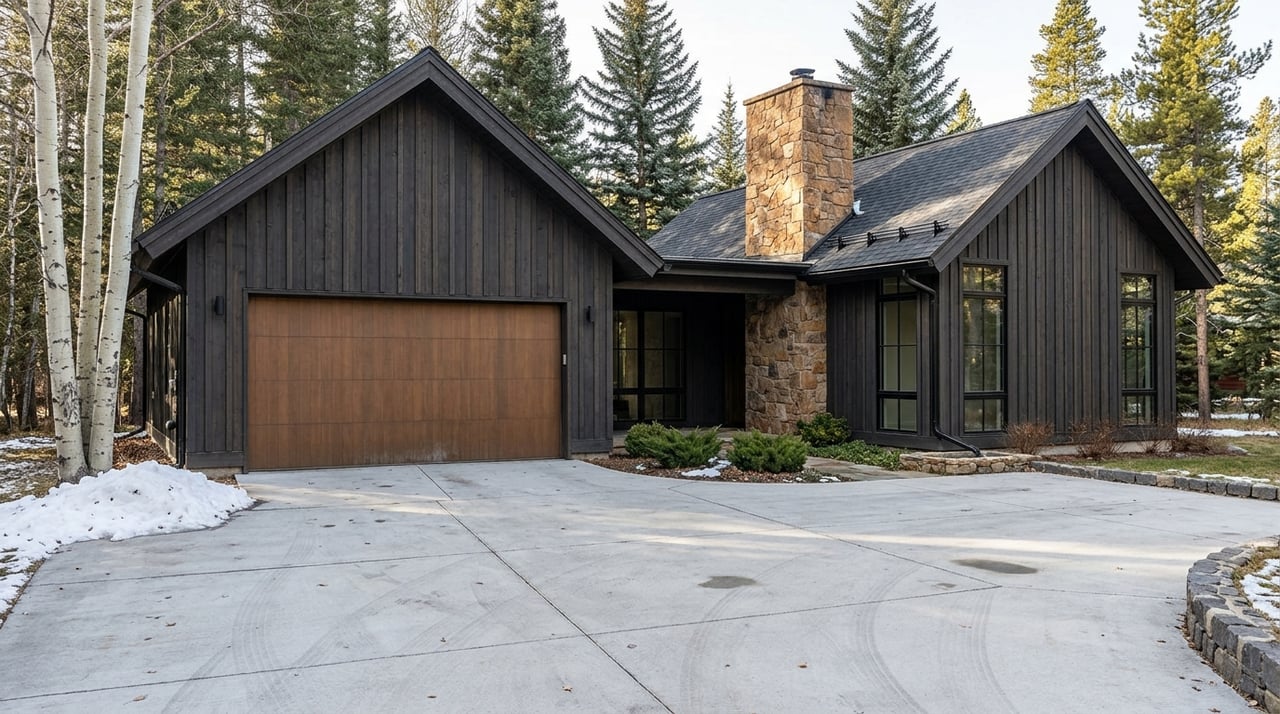
Modern Aspen homes usually take a different approach. They tend to be more view-oriented, less decorative, and more flexible in how they sit on a lot. The city’s guidelines describe the local Modern Chalet as a postwar type with a moderately pitched gable roof, expansive glass, minimal ornament, deep overhangs, and a rectilinear footprint.
Large glazed areas are often paired with brick or stone piers, and window walls may be oriented toward Aspen Mountain. The design language also includes flat roofs with minimal eaves in some modern homes. Compared with historic homes, modern properties in Aspen often feel more open and more connected to the surrounding landscape.
What modern design often prioritizes
Modern homes in Aspen usually focus on light, views, and cleaner lines. Their orientation can vary more depending on the architect and the site. That flexibility can be especially appealing if you want a home that frames mountain scenery and supports a more open interior layout.
At the same time, modern design in Aspen is not a free-for-all. The city says new buildings should be compatible with historic context in mass, scale, height, and form, while still being clearly of their own time. So even newer homes are expected to respond to the larger setting around them.
How historic and modern homes differ
If you are comparing options, it helps to look beyond surface style. In Aspen, the difference often comes down to orientation, detailing, and renovation flexibility.
| Feature | Historic homes | Modern homes |
|---|---|---|
| Overall form | Often compact and simple | Often rectilinear and view-driven |
| Site orientation | Usually street-oriented | Often more flexible and view-oriented |
| Visual style | Traditional details and modest forms | Minimal ornament and expansive glass |
| Windows | Preserved historic opening patterns | Larger glazed areas and window walls |
| Renovation approach | More review and compatibility concerns | More freedom, but still context-sensitive |
This is where buyer preference becomes personal. If you are drawn to authenticity, street presence, and original architectural features, a historic home may speak to you. If you value openness, panoramic views, and a cleaner architectural envelope, modern may be the better fit.
Renovation is often the deciding factor
For many buyers, the biggest difference between historic and modern homes is what happens after closing. Aspen’s preservation policies make it clear that exterior work, and even some interior work, on designated historic properties or properties in historic districts must be reviewed before work begins. General contractors on historic-preservation projects also need a city historic-preservation contractor license.
That does not mean historic homes are off-limits for upgrades. It means the process usually calls for more planning. Aspen’s policy says landmark properties should be maintained in ways that improve energy efficiency while preserving architectural integrity, so updates are possible when they are handled carefully.
Historic updates require restraint
The city prefers repair, compatibility, and thoughtful change over imitation. Pitkin County’s preservation handbook reinforces the same idea by advising owners not to make a building look older than it really is and not to mix unrelated styles. In short, the goal is to protect what is significant rather than create a false sense of history.
This matters if you are considering a remodel or redevelopment strategy. A historic property may offer a unique ownership experience, but it can also require a more measured design approach and a longer pre-construction planning process.
Modern homes may offer different flexibility
Modern homes can still face review, especially if they are in a sensitive context, but they often allow a different kind of design conversation. Because the city encourages new work to be compatible without copying historic styles, modern additions and newer homes can sometimes support clearer architectural distinction.
For buyers who want to personalize a property, that distinction can be important. It may create more room to update layout, glazing, and finishes in ways that feel consistent with the home’s original design direction.
Energy, maintenance, and mountain conditions
In Aspen, style also affects upkeep. The city now uses the 2021 I-codes with local energy-code amendments, and Building IQ is part of Aspen’s effort to reduce emissions from existing buildings. For historic homes, the challenge is often improving performance without losing defining features.
That is one reason the city prefers storm windows rather than full window replacement when possible on historic structures. If you are looking at a landmarked home, energy improvements may need to be balanced carefully against preservation goals.
Roofs and envelopes need attention
Aspen’s climate makes roofing and exterior maintenance especially important. The city’s historic guidelines identify common roof issues such as chimney masonry cracks, loose flashing, missing shingles, membrane cracks, plugged gutters, and ice dams. Those are not small details in a mountain market. They can influence both short-term upkeep and long-term ownership costs.
Wildfire rules also matter. Aspen currently requires Class A roofs, ignition-resistant or noncombustible exterior materials in many situations, and specific glazing and door performance. The city does allow exceptions for historically designated buildings when meeting the newer standard would damage historic features, which adds another layer of decision-making for owners of older homes.
What style can mean for lifestyle and value
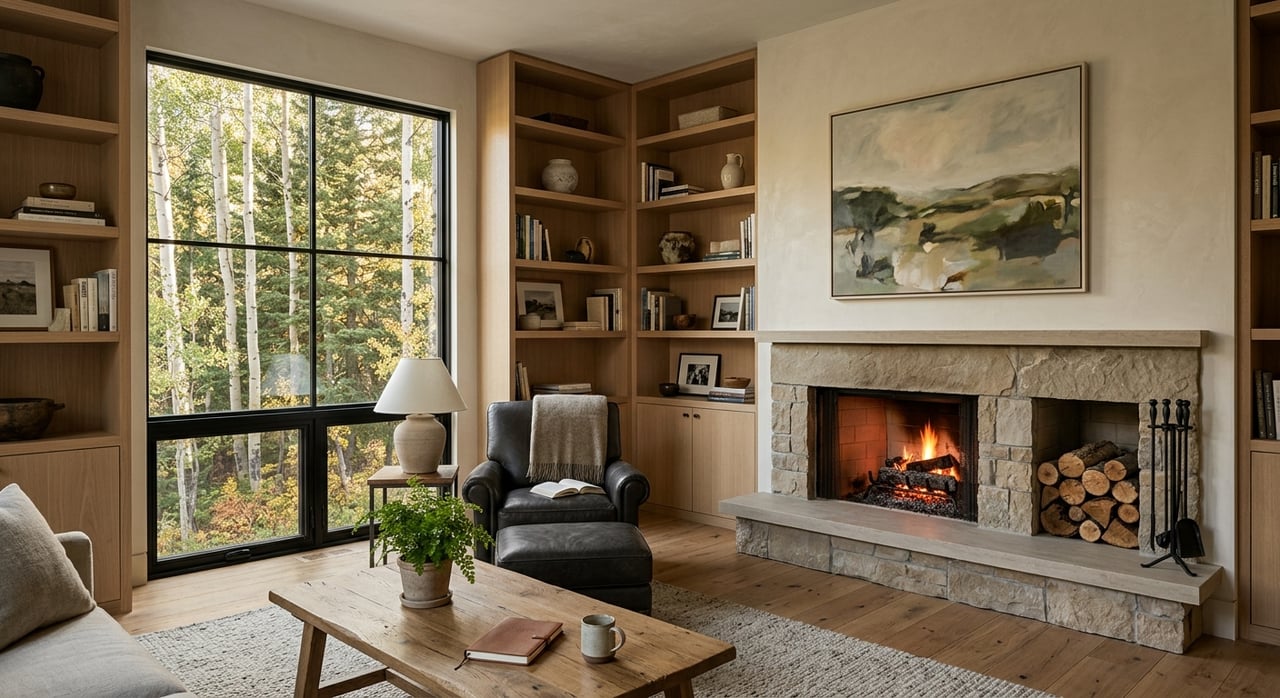
Home style in Aspen shapes how a property lives day to day. Historic homes often appeal to buyers who value authenticity, established streetscapes, and original character. Modern homes often appeal to those who want openness, stronger visual connections to the landscape, and a more streamlined interior feel.
There can also be practical value considerations. Aspen’s community plan treats historic preservation as part of the resort economy and heritage tourism, and landmark properties may be able to use the city’s TDR program to move unused square footage off the historic site. That can reduce development pressure on the property itself, which may matter if you are evaluating long-term possibilities.
Which style is right for you?
The best fit depends on how you plan to use the home. If you want a property with a strong sense of place and are comfortable with a more careful renovation path, a historic Aspen home may offer exactly the character you want. If your priorities center on views, open living, and a more contemporary design language, a modern home may align better with your lifestyle.
Either way, style in Aspen is never just cosmetic. It connects to preservation review, maintenance strategy, energy decisions, and future flexibility. That is why buyers and sellers benefit from local guidance early in the process, especially when a property’s design and permitting context could shape value.
If you are weighing the tradeoffs between a historic Aspen property and a modern mountain home, working with an advisor who understands both architecture and permitting can make the decision much clearer. To talk through your options with practical local insight, connect with Garrett Reuss.
FAQs
How do historic home rules work in Aspen?
- In Aspen, the Historic Preservation Commission reviews development, demolition, relocation, and variances for designated historic properties and historic districts, and some exterior and interior work must be reviewed before it begins.
What defines a modern Aspen home style?
- Aspen’s design guidelines describe local modern homes, including the Modern Chalet, as having expansive glass, minimal ornament, deep overhangs, rectilinear forms, and orientation that often responds to views.
Are historic Aspen homes harder to renovate?
- Historic Aspen homes often require a more careful renovation process because the city emphasizes preserving significant architectural features, maintaining compatibility, and reviewing work on designated properties.
What maintenance issues should buyers watch in Aspen homes?
- Aspen’s guidelines highlight roof and exterior issues such as loose flashing, chimney cracks, missing shingles, membrane cracks, plugged gutters, and ice dams, all of which can be important in mountain conditions.
Do modern homes in Aspen still need to fit local context?
- Yes. Aspen’s guidance says new buildings should be compatible with their historic context in mass, scale, height, and form, while still being clearly of their own time.
How can home style affect long-term ownership in Aspen?
- In Aspen, home style can influence renovation flexibility, maintenance choices, energy-efficiency strategies, and how a property fits within preservation and design review expectations.